Dinant in open-air murals: eight painted walls along the Meuse
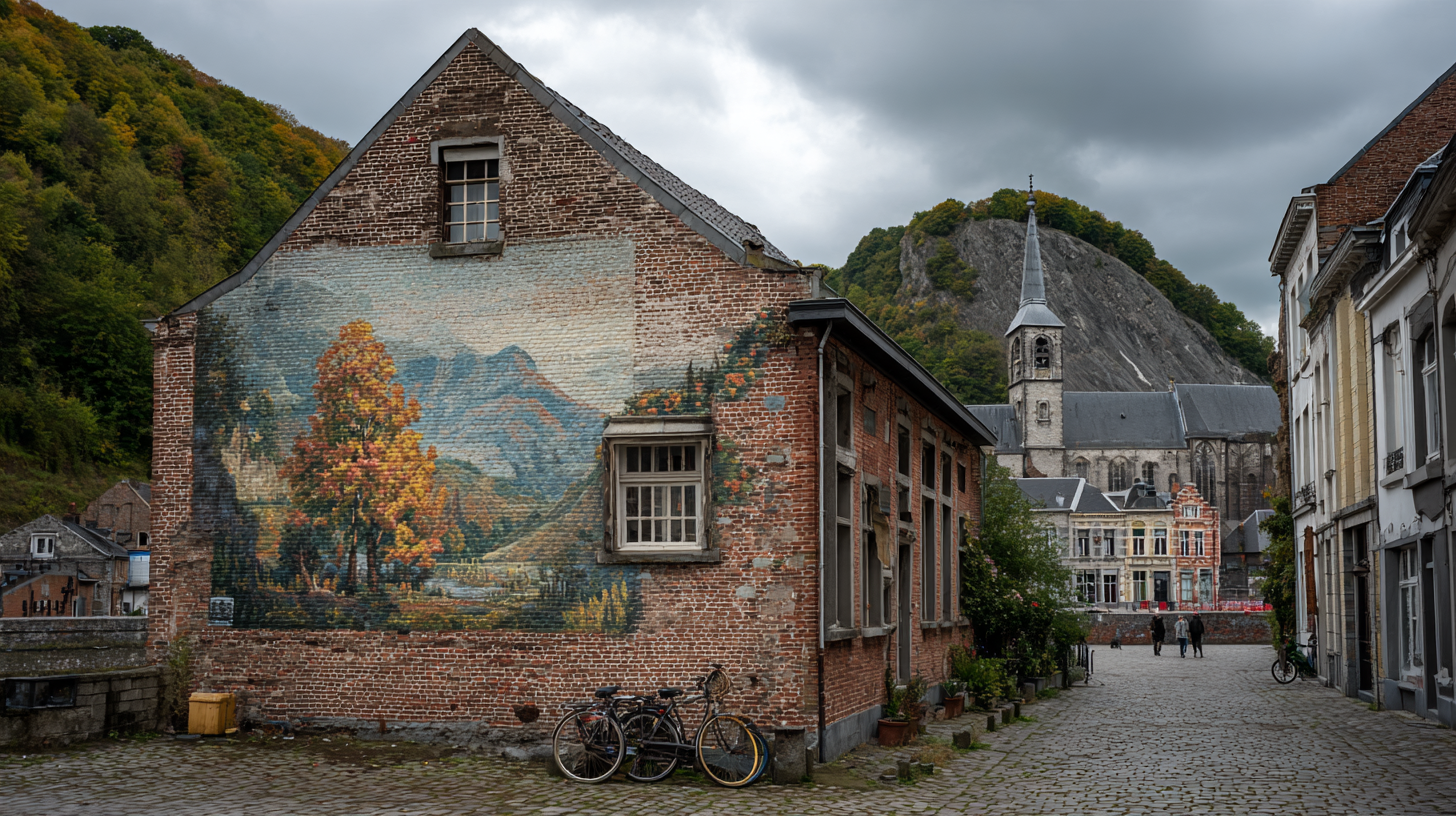
Dinant is known for its cliffs, its bulb-shaped bell tower, and the Meuse River flowing beneath its Citadel. It is perhaps less well-known for its walls. Yet, since 2022, the town has begun painting them—one by one, and without much fanfare—creating a trail that you can now explore on foot, free of charge, perhaps even fitting it in before heading back for lunch.
This trail was officially inaugurated at the end of September, coinciding with the VRAC festival and the thirtieth anniversary of the “Dinant Montmartre” event. The painters have moved on and the stalls have been packed away, but the murals remain. This is great news for anyone looking for an October outing that doesn’t depend on the weather or the purchase of an entrance ticket.
From Le Bonsoy, it’s about a twenty-minute drive. Here is how you can plan a day centered around these walls.
Eight murals, with the town as a backdrop
The route brings together eight monumental murals, spread across the city center and its surrounding neighborhoods. You can find them in the Rue Sodar pedestrian tunnel, in the Saint-Roch and Saint-Nicolas districts, near the train station, in Leffe, and at the Academy of Fine Arts. There’s no need to see them all at once: you can split the route into two separate walks, or fit a few in between a sightseeing visit and lunch.
The artists hail from Belgium, France, Switzerland, Ukraine, Poland, Africa, and Latin America. Since 2022, through successive editions of the project, they have created a diverse range of scenes—ensuring that the collection doesn’t feel like a repetitive, mass-produced series, a common pitfall for this type of art trail. Works highlighted by the local press include La partie de billes (The Marble Game), which spans 130 m²; A Ma Zone, located near the train station; and Saut d’Art, found in an underpass.
You don’t look at a mural the same way you look at a painting in a gallery. You come across it, take three steps back on the sidewalk—dodging a honking car—and then step back a little further.
The Rue Sodar tunnel and the underpasses
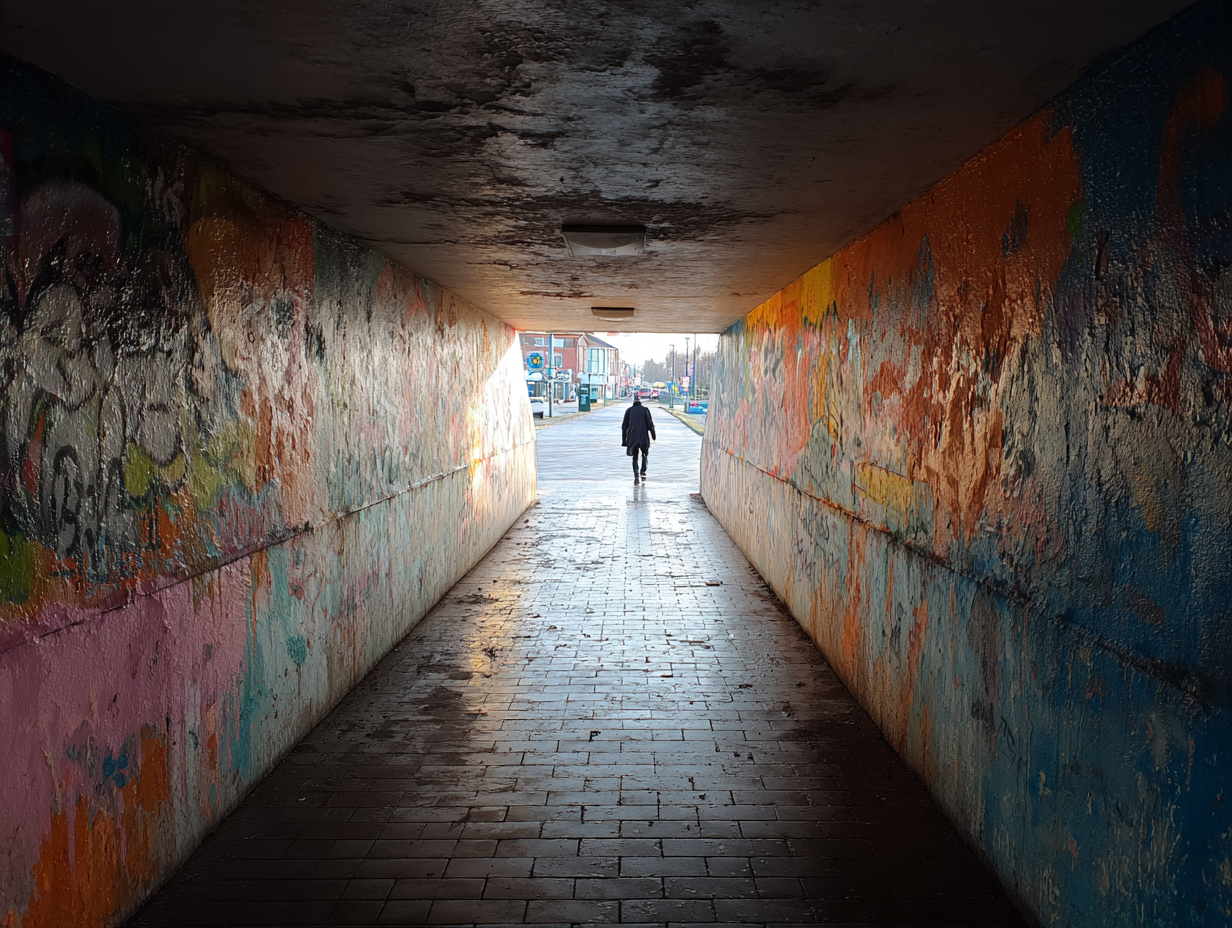
The most striking walls aren’t necessarily the tallest ones. In the Rue Sodar pedestrian tunnel, the artwork accompanies you as you pass through; you are literally walking inside the piece itself. It’s enough to make you want to slow your pace.
The same concept applies to Saut d’Art, located in an underpass: a space you would typically hurry through becomes, for once, a destination in its own right.
This is arguably what makes the approach so interesting: it does not seek to embellish places that are already beautiful, but rather to reawaken those that had faded from our notice.
A festival, artists, and a vibrant neighborhood life
This initiative didn’t just appear by magic. It is spearheaded by the Dinant Cultural Center, which has coordinated the various editions, and has found a new outlet through the VRAC festival, held in September in the former Match supermarket. Over the course of two days, graffiti artists from all over Europe created works in public view. The weekend also had a broader scope: the “Dinant Montmartre” event—celebrating its thirtieth anniversary—brought together more than 250 exhibitors in the town center’s streets.
These two events reveal something significant about the city. Dinant is more than just a tourist destination; it is a place that makes room for artists—on its walls and along its sidewalks alike.

Guided tours
At the launch, the Cultural Center announced free, no-registration-required guided tours, departing from the former Match supermarket every Saturday at 11:00 a.m. We haven’t been able to find an official schedule indicating how long these tours will continue; it’s a good idea to call the Dinant Cultural Center before heading out, just to ensure they are still taking place.
And QR codes
The organizers have also planned to add QR codes on-site, providing information about each piece—the artist, the year, and the creative approach. While not all of them may be in place yet, the initiative is worth noting, as it turns a simple stroll into an open-air art history lesson.
How to look at a mural when you don’t know anything about art
This question comes up often, and the answer is simple: you don’t need to know anything. Start with distance. A mural of this scale is best viewed in two ways: from afar to take in the overall composition, and up close to observe the texture, the paint drips, and the spots where the artist may have hesitated. Then, look at the surroundings—a window, a downspout, a garage door. The best street artists play with these constraints rather than ignoring them.
Also, pay attention to the light. The same painting will look different at 10:00 a.m. compared to 4:00 p.m.—especially in a deep, narrow valley like the Meuse Valley. If you have a camera, try returning to your favorite piece at a different time of day; you might barely recognize it.
Finally, talk about it. An eight-year-old can often express in a single sentence what might take an adult ten minutes to articulate. That is exactly what these murals are for—to make us stop and say things like, “I see a boat,” or “I see a hand reaching away.”
October in Dinant: what you need to know before you go
The off-season has its perks. The streets are less crowded, it’s easier to find a seat on a terrace, and you can wander about without constantly checking your watch. It also comes with a few drawbacks: the daylight fades early, some establishments close for a day or two each week, and the weather can change quickly. Be sure to pack a lightweight waterproof jacket and footwear suitable for wet cobblestones.
As for parking, the center of Dinant can get quite busy on weekends. If you are arriving by car, it is best to park a little further out and walk the rest of the way—the area is well-suited for this approach.
Relaxing by the water—before or after exploring the town
An urban stroll, even a short one, is sure to work up an appetite. Dinant offers plenty of spots to sit back and relax, from the terraces along the quayside and local pastry shops to the cozy tables in the Leffe neighborhood. You might even want to tuck some couques—the local honey-based biscuits, famous for their legendary hardness—into your bag to take home. We share the story behind them in a previous article.
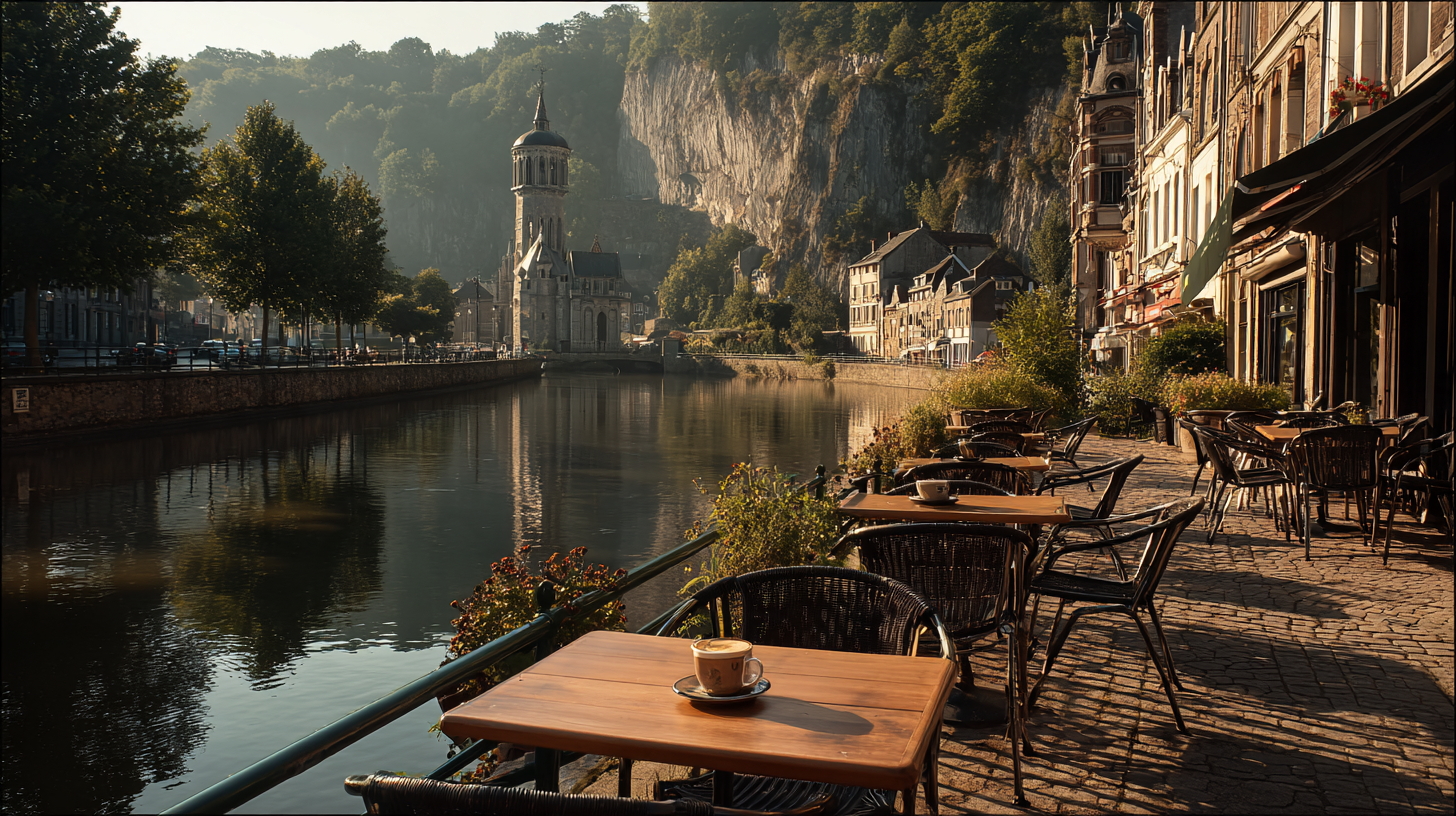
And if the weather clears, take a moment to look out over the Meuse. Autumn here is mild, the water is calm, and in the late afternoon, the cliffs take on a hue that even the finest fresco painting could never quite capture.
A typical day, starting from Le Bonsoy
- Morning: Depart from Le Bonsoy, arriving in Dinant around 10:00 a.m. Enjoy your first coffee in town, then begin the route: the Rue Sodar tunnel, followed by the Saint-Roch neighborhood. If a Saturday works for you, meet at 11:00 a.m. at the former Match supermarket for a guided tour (subject to confirmation).
- Midday: Lunch in Dinant, either near the train station or by the riverfront. Restaurants tend to fill up around 12:30 p.m., so it’s best to arrive a little earlier.
- Afternoon: Continue the route, taking in the train station, Saint-Nicolas, Leffe, and the Academy of Fine Arts. Take a break along the banks of the Meuse—and why not pick up a couque (traditional Dinant biscuit) for the road?
- Evening: Return to the peaceful setting of Le Bonsoy. After a day spent navigating cobblestone streets, a warm meal and the sight of the forest settling down for the night—the contrast is a welcome change.
Practical Information
| What | A trail featuring eight monumental murals throughout the center of Dinant and its surrounding neighborhoods |
| Where | Rue Sodar tunnel, Saint-Roch, Saint-Nicolas, the train station, Leffe, and the Academy of Fine Arts |
| Price | Free, open access |
| Guided tours | Free; held on Saturdays at 11:00 AM, starting from the former “Match” store—no registration required (please confirm with the Cultural Center) |
| Organizer | Dinant Cultural Center |
| Recommended duration | Two to three hours, depending on your pace |
| From Le Bonsoy | Approximately 20 minutes by car |
Exploring more in Dinant
A few ideas to round out your outing—perfect to include either before or after your main activity:
- The *couque de Dinant*: a biscuit not meant for biting
- Bouvignes: the medieval town facing Dinant
- Reach new heights: thrills and panoramic views in Dinant
- Between legend and stone: the Bayard Rock
- The “Chefs’ Boat” in Dinant: an exceptional gastronomic cruise on the Meuse
Retreating after your time in the city
After a day spent among sidewalks and colors, it’s a relief to return to silence. The Serenity bungalow offers exactly that: an immersion in nature, with windows opening out onto the trees, and a sudden sense of calm—much like the feeling when a drop cloth is pulled away from a freshly painted wall.
Does a getaway to Dinant sound appealing? Book your stay at Domaine du Bonsoy and take advantage of the late season, when the towns grow a little quieter and the walls themselves finally have time to be truly admired.
Sources
- L’Avenir: A mural trail and street art festival in Dinant (September 23, 2026)
- L’Avenir: Street art in the former Match store (September 25, 2026)
2026)