The Molignée, a valley to explore by bike
There are valleys one simply passes through, and others one inhabits—if only for an afternoon. The Molignée belongs to the latter category. It is short—barely twenty kilometers, stretching from the Condroz plateau to the Meuse, which it joins at Anhée—yet it possesses the richness and depth of an entire region. It features an abbey that brews beer and ages cheese, a fortress dismantled by a French king, two villages ranked among the most beautiful in Wallonia, and a former railway line that is now traversed by the power of one’s own legs.
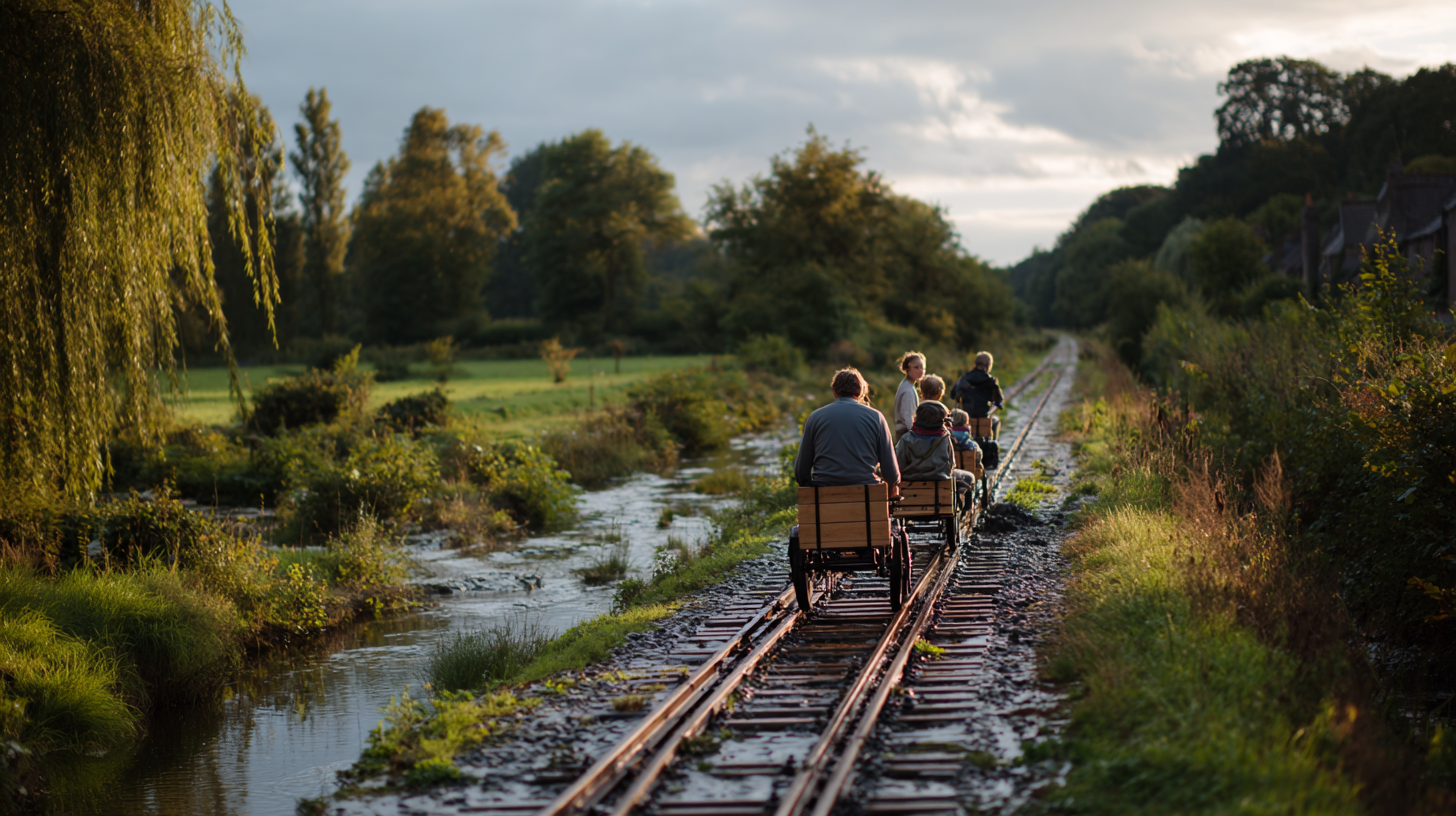
For that is its irresistible charm: along the Molignée, you don’t drive—you pedal. On the disused tracks of the old Line 150, four-seater railbikes glide past meadows, willows, and blue-stone walls. The sound is gentle—a steady metallic clatter punctuated by children’s laughter—and the pace is that of a leisurely stroll. In September, when the light slants low and the first leaves turn russet along the railway bed, the experience takes on a special quality.
We invite you to visit a valley that our travelers often discover by chance—and never stop talking about. Allow for a drive of about 35 minutes from the Domaine du Bonsoy; it is a small price to pay for one of the loveliest days the province of Namur has to offer.
The Molignée Railbikes: pedaling along a forgotten track
The idea was born out of abandonment. When the railway line connecting Warnant and Maredsous ceased operations, the tracks remained—useless and overgrown with wild grass. Rather than tearing them up, the decision was made to run railbikes on them: the small pedal-powered vehicles once used by railway workers to inspect the tracks. The concept was an instant success and has remained popular ever since.
A railbike accommodates two to four people, with two doing the pedaling. Children under six can sit on the lap of an adult who isn’t pedaling. The concept is disarmingly simple: you take your seat, start pedaling, and watch the valley roll by.
The real luxury of the railbike is that you can’t take a wrong turn. There is only one track, and it leads exactly where you need to go.
Two departure stations, three routes
This is a detail to watch out for when booking: the railbikes depart from two different locations, depending on the chosen route.
| Journey | Departure | Distance | Duration | Rate per drainage |
|---|---|---|---|---|
| Falaën ↔ Maredsous (back and forth) | Falaën — Rue de la Gare 82 | 6 km | ≈ 3 h 30 | 26 € |
| Warning ↔ Falaën (back and forth) | Warnant — Rue de la Molignée 115 | 8 km | ≈ 1 h 30 | 26 € |
| Warnant ↔ Falaën ↔ Maredsous (back and forth) | Warnant — Rue de la Molignée 115 | 14 km | ≈ 5 h 30 | 48 € |
Please note that the price is per railbike, not per person: for a group of four, the cost becomes very reasonable. Groups booking five or more railbikes benefit from a special rate (€23 and €43), and schools are offered specific terms.
When to visit and how to plan your trip
- 6 km route (Falaën): open all year round. Departures at 11:00 am, 1:00 pm, 3:00 pm, and 5:00 pm.
- 14 km route (Warnant): open all year round, Tuesday to Sunday. Departures at 10:00 am, 12:00 pm, 2:00 pm, and 4:00 pm.
- 8 km route (Warnant): open from March 30 to November 11, Tuesday to Sunday. Same departure times.
Departures from Warnant are suspended on Mondays, except during July and August and on public holidays. The last return trip from Maredsous station is scheduled for 6:00 p.m. under the standard timetable—a schedule that remains in effect throughout September and October.
You can book online 24 hours a day, with free cancellation. While booking isn’t mandatory, we highly recommend it, as slots fill up quickly on off-season weekends. On-site amenities include free parking and payment options via cash or card; leashed dogs are welcome. The site is also accessible to people with reduced mobility.
Maredsous: the abbey that feeds and refreshes
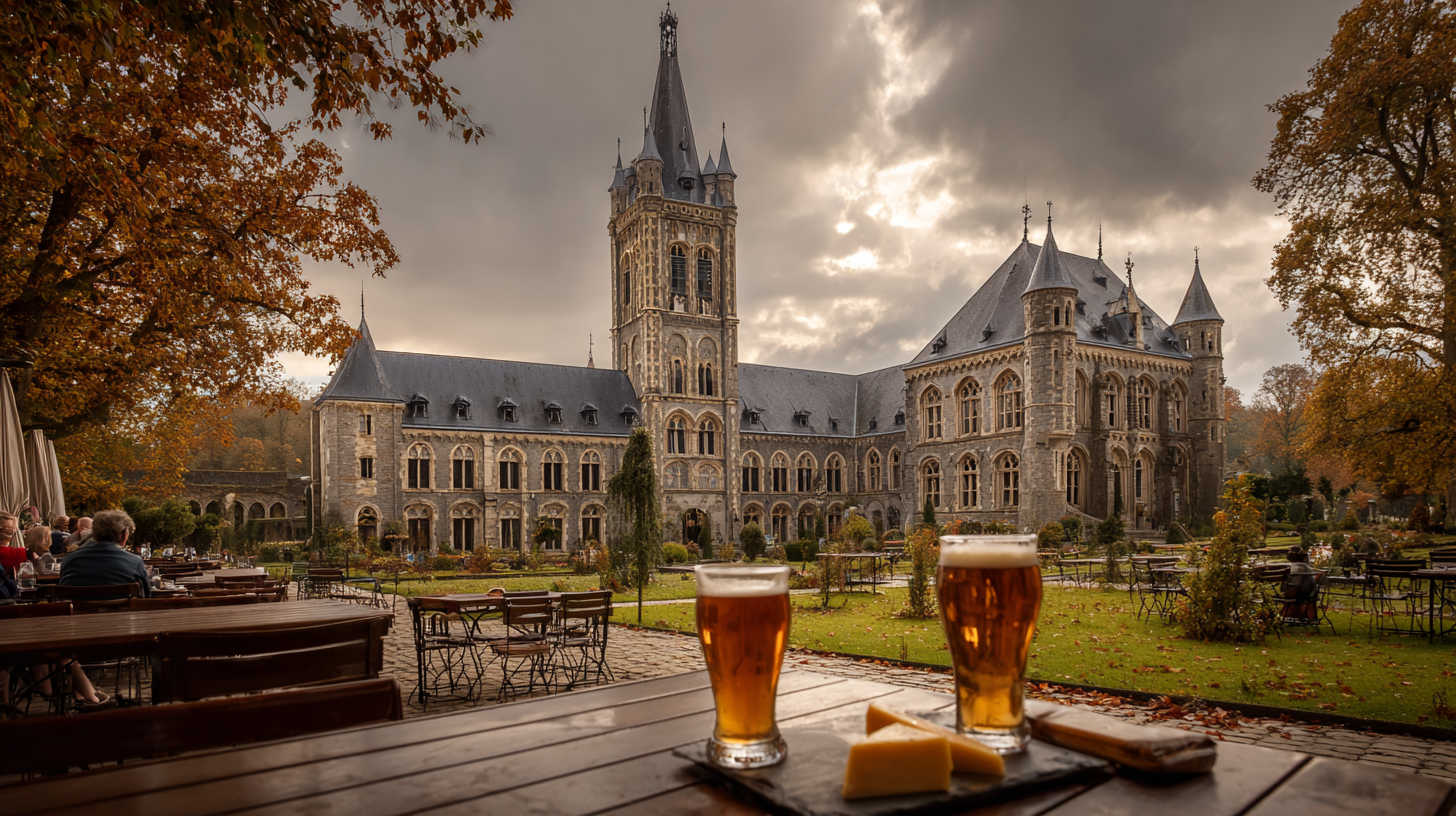
At the end of the six-kilometer route, the path stops at the foot of a stone colossus: Maredsous Abbey in Denée. One might expect a Romanesque structure, but it is Neo-Gothic—built in the late 19th century by Benedictine monks who never did anything by halves. Its spire pierces the valley like an exclamation mark.
The good news is that everything is open and the main attractions are free: the Saint-Joseph visitor center, the car park, access to the abbey church, and the playground. You can simply show up without any prior planning and enjoy a delightful two hours there.
Food, beer, and cheese
The visitor center cafeteria is open Monday through Friday from 11:00 a.m. to 6:00 p.m., and on Saturdays, Sundays, and public holidays from 10:00 a.m. to 7:00 p.m. The microbrewery stays open later: until 10:00 p.m. on Fridays and Saturdays, and until 8:00 p.m. on Sundays. Here, you can drink Maredsous beer—Blonde, Brune, or Triple—and eat the cheese of the same name, a pressed, washed-rind cheese with a bold aroma that hints at its distinctive character.
The cheese dairy itself is not open to visitors; the microbial ecosystem of the aging cellars is far too fragile to withstand the presence of the public. However, the Small Cheese Museum is open to visitors as part of a guided tour.
Guided tours
Three options are available, lasting approximately 1 hour and 30 minutes, departing from the Saint-Joseph esplanade:
- Abbey tour — history of the site, architecture, and monastic life.
- Tasting tour — the Small Cheese Museum, the hop garden, the microbrewery, and a concluding beer and cheese tasting.
- Distillery tour — including a tasting of three spirits.
Outside of school holidays, they take place every Saturday, Sunday, and public holiday at 2 p.m. and 4 p.m.; during the holidays, they run daily at the same times. The cost is €9 per person, €7.50 for seniors and students, and free for children under twelve. Tickets are available from noon at the bookshop.
Montaigle: the fortress France never returned
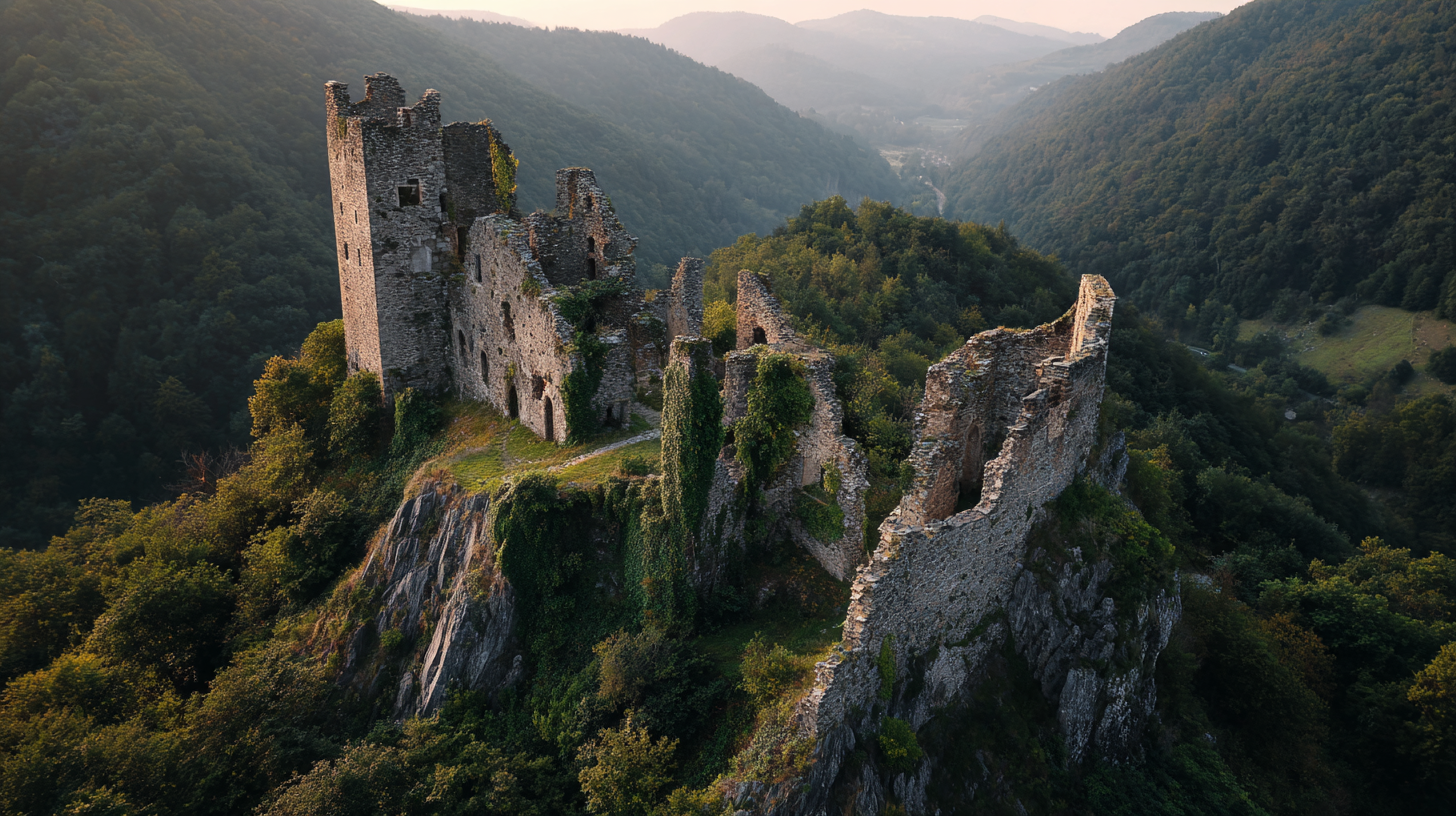
Perched on a rocky spur at the confluence of the Molignée and Flavion rivers, the ruins of Montaigle Castle overlook the valley like a petrified threat. The site has been occupied since prehistoric times; an initial castle appeared there around the year 900, and the fortress whose outlines are visible today dates from the early 14th century.
Its history comes to an abrupt halt in 1554, when the troops of Henry II of France razed it. It was never rebuilt. What remains—sections of wall, the base of the keep, breached curtain walls—has been designated as Exceptional Heritage of Wallonia, and one understands why upon reaching the summit: the view encompasses the entire valley.
Some castles are visited; Montaigle is climbed. The reward lies at the top, and it is worth every step.
At the foot of the ruins, a 100-square-metre archaeological museum displays the finds from the excavations: crossbow bolts, cannonballs, tools, tableware, and medals. A cafeteria and restrooms complete the facilities, and pets on leashes are permitted. The site holds Access-i certification.
In September and October, Montaigle continues to operate on its high-season schedule: Tuesday to Sunday, 10 a.m. to 5 p.m. (last entry at 4:30 p.m.), and closed on Mondays except for public holidays. Expect to pay around €6 for adults, €4 for seniors, and €2–€3 for children—with a 20% discount available upon presentation of the VISITWallonia Pass. A quick phone call before you set off will confirm the exact schedule and ensure there are no unexpected closures.
Falaën et Sosoye, deux villages classés à trois kilomètres l’un de l’autre
The Molignée boasts the rare distinction of featuring two villages designated as “Most Beautiful Villages of Wallonia” within three kilometers of each other. If this topic interests you, we have put together a comprehensive overview of the most beautiful villages accessible from Bonsoy.
Falaën
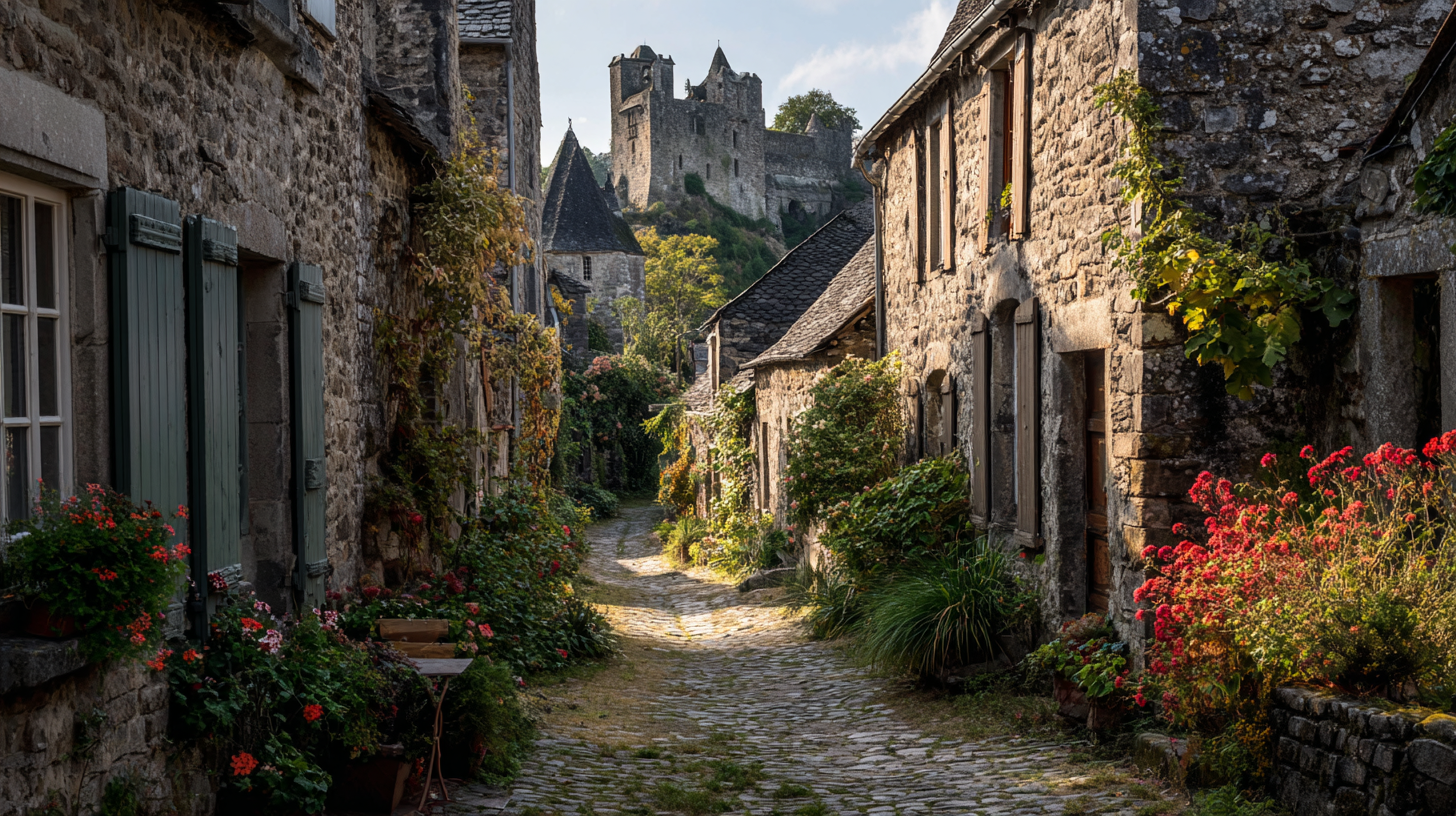
The village is centered around its 17th-century fortified farmhouse—a listed heritage site since 1972. It is a massive, four-sided complex featuring corner towers (one of which is in ruins) and is accessed via a gatehouse and a three-arched bridge that replaced the original drawbridge. As it is private property, it is best admired from the outside—a view that is truly magnificent. Also worth seeing are the former 19th-century brewery (where the hop-drying kiln is still visible beneath the roof), the Chapel of Notre-Dame de Lourdes, and the old forge. An interpretive trail begins at the church square.
Falaën is also the place to taste “Li Crochon,” the valley’s specialty: a hollowed-out bread roll filled with ham, cheese from the Chertin farm, and crème fraîche, then baked and served with the beer of the same name. It is a hearty, satisfying treat that proudly reflects its local origins.
Sosoye
A more low-key destination, Sosoye lines up its limestone houses along the river. Visitors can explore the Church of Notre-Dame de la Nativité (18th century, listed) and the Tithe Barn (17th century, listed), but the highlight is the Montagne de Ranzinelle—a limestone grassland nature reserve offering a magnificent view of the valley. A marked 7 km trail (2.5 hours, moderate difficulty) circles the area, starting from the village square.
From Falaën, another 8 km loop (3 hours, easy, green-and-white rectangular markers) leads to Montaigle, starting from the village square. A great way to extend your day on foot—in the same spirit as our Fondry des Chiens loop in Nismes.
Where to enjoy a real gourmet stop
The valley is not short on great places to eat. Two spots are particularly worth a visit.
Les Montagnards, in Sosoye
Housed in the former village school, this establishment serving regional cuisine has been run for nearly thirty years by the same owner-chef. With twenty seats inside and twenty on the terrace, reservations are essential. Expect to pay €17–€20 for a main course. Open for lunch Wednesday through Sunday, and also for dinner on Saturday evenings. Rue du Marteau 25, 5537 Sosoye — 082 69 91 38.
La Brasserie du Moulin, in Anhée
Located at the mouth of the valley, La Brasserie du Moulin has been a local institution for over twenty years. Fully renovated and part of the Jardins de la Molignée hotel complex, it offers a “bistronomic” menu featuring local produce, vegetarian options, and sharing platters served throughout the day. Its huge advantage is that it is open seven days a week, from 12:00 PM to 9:30 PM—handy if your railbike ride runs late. Rue de la Molignée 10, 5537 Anhée — 082 77 05 00.
If you are interested in the local products of the Meuse region, continue reading with our article on Wépion strawberries or Floreffe Abbey, its beer, and its bread.
Our one-day itinerary in the Molignée Valley
- Morning (9:30 AM) — Depart from Le Bonsoy. Drive via Dinant and Anhée, heading up the valley to Falaën. Coffee in the village square, followed by a tour of the village and its fortified farmhouse.
- Midday (11:00 AM) — Railbike excursion starting from Falaën, covering a 6 km route to Maredsous. Lunch at the abbey: Maredsous cheese sandwich and locally brewed beer, enjoyed on the terrace.
- Afternoon (2:30 PM) — Return trip by railbike to Falaën, then a climb to the ruins of Montaigle and a visit to the archaeological museum. Panoramic view of the valley from the summit.
- Evening (6:00 PM) — Detour via Sosoye to catch the low-angle light hitting the blue limestone, followed by dinner at the Brasserie du Moulin in Anhée before returning to Le Bonsoy.
Our tip: book the 11 a.m. railbike. You’ll dine at Maredsous after the tour buses have left, and make your way back down the valley in the day’s most beautiful light.
Practical information
Molignée Railbikes
- Addresses: Rue de la Gare 82, 5522 Falaën (6 km route) — Rue de la Molignée 115, 5537 Warnant (8 km and 14 km routes)
- Telephone: 082 69 90 79
- Website: draisines.online
- 2026 Rates: €26 per railbike (6 km and 8 km), €48 (14 km) — 2 to 4 people per railbike
- Schedule: departures at 11:00, 13:00, 15:00, 17:00 (Falaën) and 10:00, 12:00, 14:00, 16:00 (Warnant)
- Distance from Le Bonsoy: approximately 35 minutes by car
Maredsous Abbey — Saint-Joseph Visitor Centre
- Address: Rue de Maredsous 11, 5537 Denée
- Telephone: 082 69 82 84
- Website: tourisme-maredsous.be
- Prices: free admission and parking — guided tours €9 (€7.50 for seniors and students; free for children under 12)
- Opening hours: cafeteria Monday–Friday 11:00 am–6:00 pm, Saturday–Sunday and public holidays 10:00 am–7:00 pm — microbrewery open until 10:00 pm on Fridays and Saturdays
- Distance from Le Bonsoy: approximately 35 minutes by car
Montaigle Castle
- Address: Rue du Marteau 10, 5522 Falaën
- Phone: 0470 46 03 62
- Website: chateau-fort-de-montaigle.be
- Prices: approx. €6 adults, €4 seniors, €2–€3 children — 20% discount with the VISITWallonia Pass
- Opening hours (April to early November): Tuesday to Sunday, 10:00 AM – 5:00 PM; last entry at 4:30 PM
- Distance from Le Bonsoy: approx. 35 minutes by car
Returning to peace and quiet after a day of pedaling
There is something deeply satisfying about returning from a day out on a railbike: your legs have had just the right amount of exercise, your mind is clear, and all you crave is an armchair and a roaring fire. That is exactly what the Woody Lodge offers—our coziest chalet, featuring light-toned wood and the soft glow of late-season light. Guests love to linger into the evening here, enjoying a Maredsous beer brought back from the abbey.
And if you plan to stay longer, the region offers plenty to keep you busy: the medieval town of Bouvignes is just twenty minutes away, the Wallonia Festival in Namur lights up mid-September, and kayaking down the Lesse River is perfect for beautiful autumn days.
There is still availability for the late season at Domaine du Bonsoy. It is our favorite time of year: the valleys empty out, the colors come alive, and a sense of calm returns. Book your stay at Bonsoy and come discover the Molignée before winter closes in on the valley.
Sources
- Molignée Railbikes — 2026 rates and information
- Maredsous Abbey — opening times and guided tours
- Montaigle Castle — 2026 visits
- The Most Beautiful Villages of Wallonia — Falaën
- The Most Beautiful Villages of Wallonia — Sosoye
- Brasserie du Moulin, Anhée
- Explore Meuse — Meuse Valley Tourism Office (Namur-Dinant)