Escavèche, the vinegary treasure of the Chimay ponds
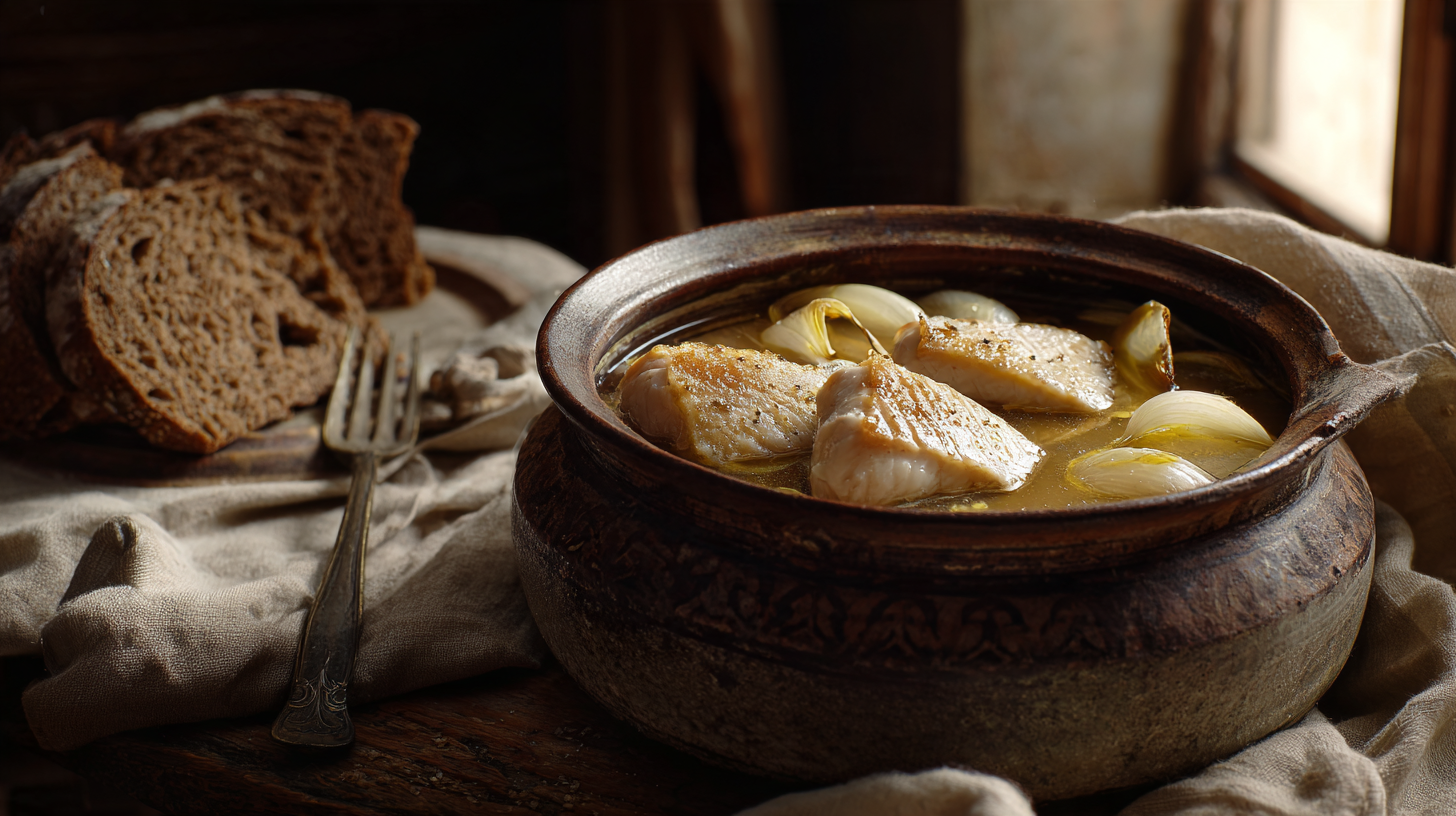
Some dishes can be described in three words, while others require four centuries to explain. Escavèche falls into the latter category. Beneath its modest appearance—a few pieces of fish set in an amber-hued jelly, accompanied by onion rings, all held within a stoneware crock—lies the history of the Walloon ironworks, the legacy of Spanish soldiers, and the ingenuity of people who lived long before the invention of the refrigerator.
What few travelers realize is that this specialty is far from a mere relic of folklore. It remains a living tradition, granted protected status by Europe in 2021. The region where it is produced begins just outside the town of Hastière—including the village of Doische, located just ten minutes from the Bungalows du Bonsoy.
We invite you to discover it for yourself—not in a museum, but in the very place where it is still crafted today: a small village workshop, nestled among the ponds and woodlands of the Viroin valley.
A dish born from a fisherman’s dilemma
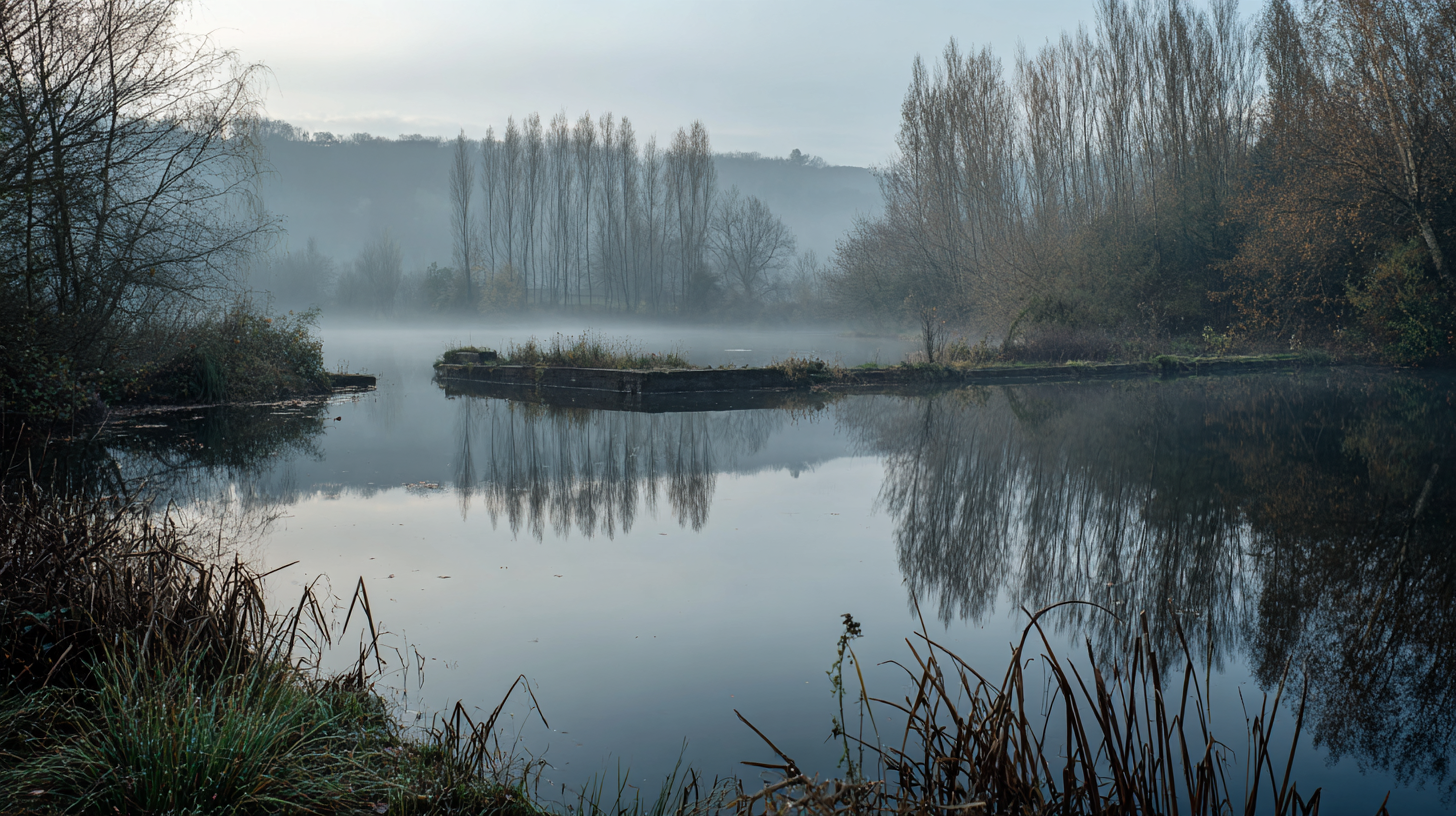
To understand *escavèche*, one must first look at the water. The region stretching from Chimay to Couvin, and from Philippeville to Viroinval, long relied on the iron industry. Its subsoil was rich in ore, its forests provided charcoal, and—most importantly—its rivers were dammed to power the bellows and hammers of the forges. These dams gave rise to dozens of artificial ponds—including the famous Virelles Pond, created at the end of the 16th century by damming the Nicolas stream.
Eventually, the metallurgical industry declined. By the 18th century, the ponds were abandoned by industry and reclaimed by the local inhabitants, who discovered a far more immediate resource within them: fish—such as eel, pike, tench, and perch.
There remained a problem that we have completely forgotten today: when a pond was drained for dredging, one would suddenly find oneself with hundreds of kilos of fish—and no way to preserve them.
The solution was chemical before it was gastronomic. By cooking the fish and then submerging it in a vinegar-based sauce, the acidity effectively halts time. Once filled and sealed, the stoneware jar became a store of protein for the lean months. Originally, *escavèche* was an act of survival; it has since become a source of pleasure.
Spanish in origin, Walloon by adoption
The word itself reveals its journey. The Iberian escabeche—which in turn traces its roots to the Arabic *sikbâj*—refers to the very same technique of acidic marinating found everywhere from Andalusia to the Philippines. It arrived in our region through a major gateway in history: that of the Spanish Netherlands during the 15th and 16th centuries, when the Principality of Chimay and its surrounding areas were under the administration of Madrid.
The garrisons moved on, but the recipe remained. It adapted to local freshwater fish, shedding its exotic spices in favor of onions. In this way, a Mediterranean method for preserving food unexpectedly became the culinary emblem of a region defined by the forests and ponds of the “Hainaut Boot.”
It was not until the 1930s that escavèche moved beyond the family kitchen to become a true restaurant specialty, served to visitors who had come to enjoy the fresh air around Virelles.
What’s actually in the jar
Don’t look for cream, butter, or long, slow cooking here. Escavèche is characterized by an almost austere simplicity—a rigor from which it draws its distinct personality.
- The fish: traditionally eel, which is the most highly prized. Nowadays, it may also be pike, zander, arctic char, or trout. It is always cooked, never served raw.
- The sauce: a vinegar-based, gelatinous preparation—this is the dish’s signature feature. As it cools, it sets, coating each piece in a translucent jelly.
- Onions: an essential ingredient; sliced into rings, they provide a crunch and a sweetness that balance the acidity.
- Lemon and white wine: optional, depending on the producer. Each maker keeps their specific proportions a secret.
- The container: the product must be packaged in a jar—traditionally made of stoneware.
And above all: escavèche is eaten cold. It is never reheated. It is served as a starter or a light meal, not as a slow-cooked stew.
Since 2021, a name that can no longer be misappropriated
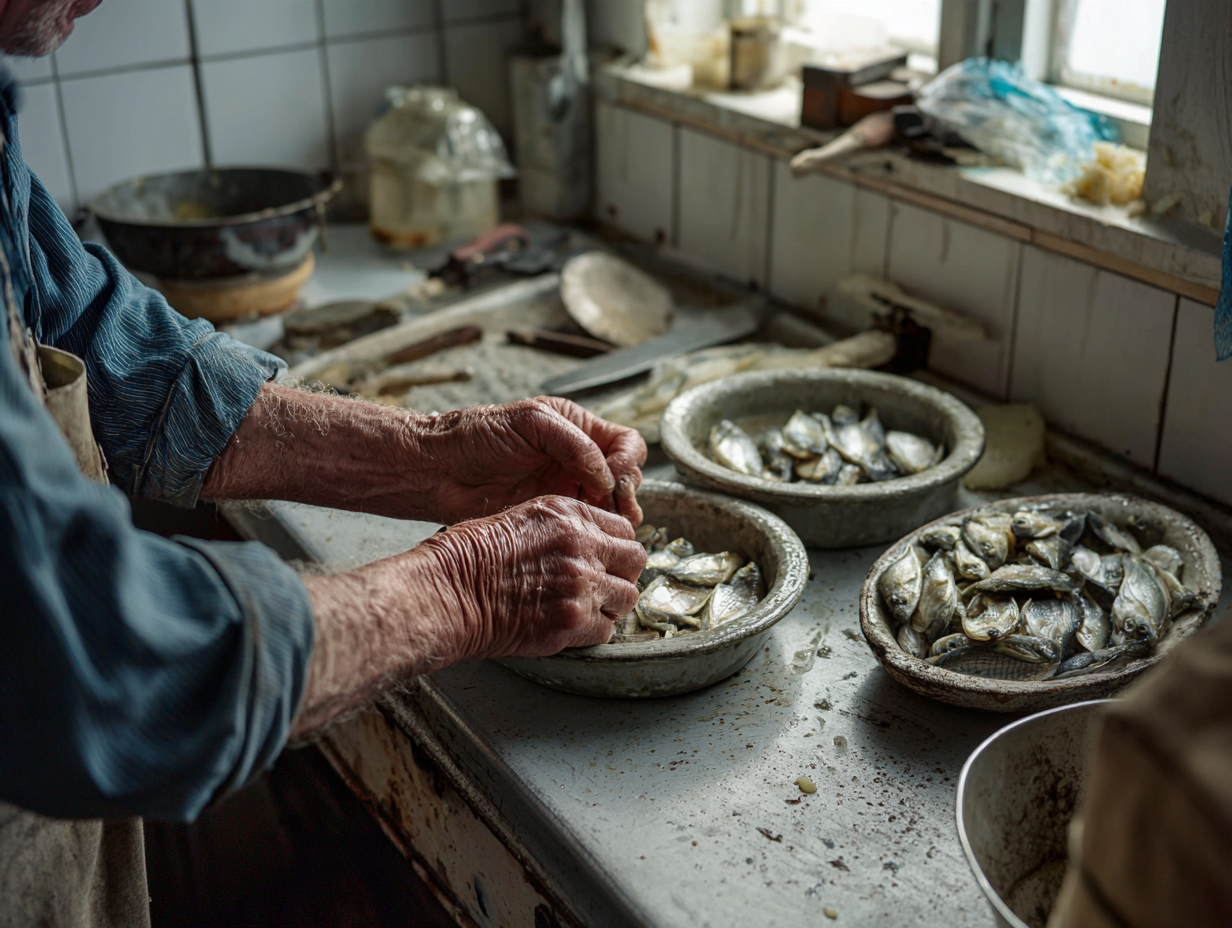
It took more than ten years of conceptualization and nearly three years of formal procedures. In 2017, the Association of Chimay Escavèche Producers submitted an application for a Protected Geographical Indication (PGI) to the European Commission. In early 2021, the name “Escavèche de Chimay” was officially registered in the Official Journal of the European Union.
In practical terms, no industrial manufacturer may now use this name on a jar produced elsewhere. The area designated for production and packaging is strictly defined:
| Province | Municipalities within the PGI area |
|---|---|
| Namur | Cerfontaine, Couvin, Doische, Philippeville, Viroinval |
| Hainaut | Chimay, Momignies, Froidchapelle, Sivry-Rance |
Take a close look at this list: Doische is a neighboring municipality to Hastière. In other words, from your bungalow, you are less than a ten-minute drive from the border of a European-designated appellation area. Currently, only three producers hold this designation: Escavèche du Val d’Oise, Escavir, and the cooperative (SCRL) Fagnes & Saveurs.
“Escavèche is a product meant for keeping—it knows how to wait. In fact, that is its very purpose.” — l’Apaq-W, referring to the ten years it took to secure PGI (Protected Geographical Indication) recognition.
Where to buy it, where to taste it
Escavir, in Olloy-sur-Viroin
This is the closest location to Le Bonsoy, and our top recommendation for a first experience. The business was founded in 2002 by Philippe Dumoulin, based on an escavèche recipe passed down to him by his father-in-law, Pierre Lobet. It functions as both a village fishmonger and a production workshop, where they craft PGI-certified escavèche de Chimay, as well as smoked salmon and smoked trout fillets.
| Day | Hours |
|---|---|
| Monday and Tuesday | 9:00 AM – 6:00 PM |
| Wednesday | Closed |
| Thursday and Friday | 9:00 AM – 6:00 PM |
| Saturday | 9:30 AM – 4:00 PM |
| Sunday | Closed |
Rue Jean Chot 35, 5670 Olloy-sur-Viroin — +32 (0)60 39 00 35 — approximately 35 minutes from Le Bonsoy. Please note that fresh fish deliveries arrive between Thursday and Saturday.
L’Escavèche du Val d’Oise, in Macquenoise
The workshop is located on Rue du Val d’Oise in Macquenoise (Momignies), right where the Oise River flows at the foot of the village—the very same Oise that later winds its way through the Picardy region. In 2011, production was taken over by Françoise Meulemeester, a niece of the Danvoye-Meulemeester family, who gave the business its current name. It’s about an hour’s drive away—a trip in itself, but one that enthusiasts will tell you is well worth the effort.
Dining out near Chimay
If you would rather enjoy it served at a table than take it home, the Auberge de Poteaupré in Bourlers—situated at the very gates of Scourmont Abbey—features it as one of its house specialties, alongside meatballs in a Trappist cheese sauce. For over a century, this establishment has been the go-to destination for Chimay’s Trappist products. It is also, it must be said, the perfect place to find the ideal accompaniment for your escavèche.
How to serve it—properly
Escavèche doesn’t fare well with haste or excessive refinement. Here is our advice for guests who head home with a jar in tow:
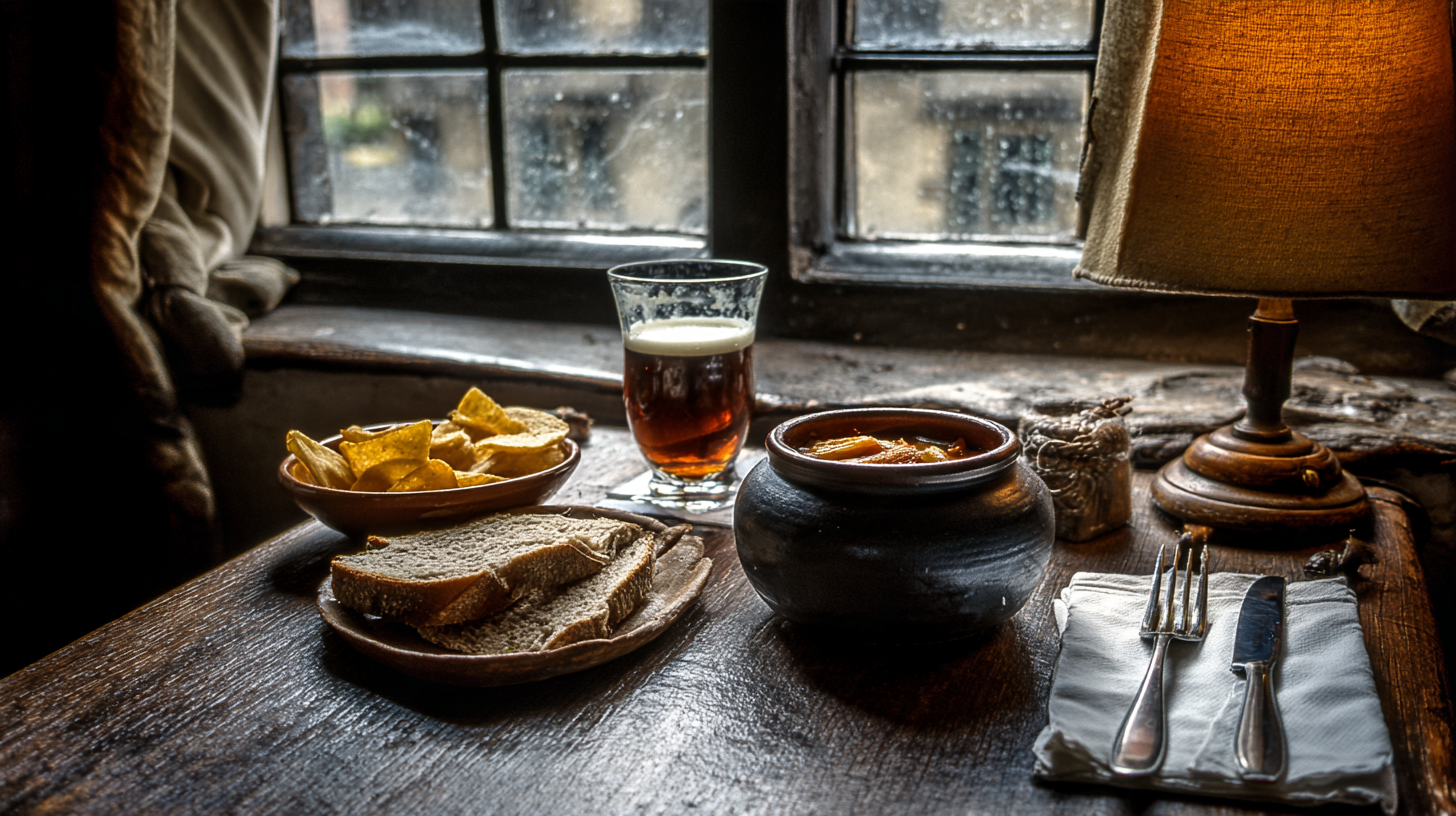
- Take it out of the fridge twenty minutes beforehand. If it’s too cold, the jelly’s flavor is muted; at cellar temperature, it releases the notes of vinegar and onion.
- Brown bread—nothing else. A thick slice of rustic, country-style bread—feel free to add a little butter. White bread simply doesn’t measure up.
- Fries, if you dare. It’s the quintessential regional pairing, and it works: hot against cold, rich/fatty against acidic.
- To drink: A dark abbey ale, a distinctly bitter blonde ale, or a crisp, dry white wine. The acidity of the dish calls for a partner that can hold its own.
- Never heat it up. The jelly would melt, and the dish would lose its entire purpose.
Our gourmet one-day itinerary in the Viroin region
- Morning — Depart from Le Bonsoy around 9:30 a.m., heading toward Viroinval via Doische and Vierves. Stop by Escavir in Olloy-sur-Viroin to pick out your jars—it’s a great chance to ask questions; the team will be happy to answer them.
- Midday — Enjoy a picnic of escavèche (marinated fish), rustic brown bread, and local beer at a table in the park in Nismes, or stop for a meal at one of the village eateries. Twenty minutes is all it takes to understand why this dish has endured for four centuries.
- Afternoon — Take a post-meal stroll to the Fondry des Chiens, a spectacular limestone chasm set within a dry grassland just a few minutes away. In autumn, the light is magnificent, and the crowds have long since departed.
- Evening — Return to Le Bonsoy through the valley, enjoy one last chilled jar, and relax by the crackling wood-burning stove to end the day.
Practical Information
- Product: Escavèche de Chimay — Protected Geographical Indication (PGI) since 2021
- Nearest producer: Escavir, Rue Jean Chot 35, 5670 Olloy-sur-Viroin
- Telephone: +32 (0)60 39 00 35
- Website: www.escavir.be
- Opening hours: Monday, Tuesday, Thursday, and Friday from 9:00 AM to 6:00 PM; Saturday from 9:30 AM to 4:00 PM; closed on Wednesdays and Sundays
- Other producer: Escavèche du Val d’Oise, Rue du Val d’Oise, Macquenoise (Momignies)
- Where to taste it: Auberge de Poteaupré, Bourlers (Chimay) — chimay.com
- Approximate price: Expect to pay between €8 and €15 per jar, depending on the type of fish and the size
- Distance from Domaine du Bonsoy: Approximately 35 minutes to Olloy-sur-Viroin, 50 minutes to Chimay
Continue your discovery
The Viroin valley and the “Botte du Hainaut” (the “boot” of Hainaut) deserve much more than just a quick there-and-back trip. While you are in the area, a visit to the Aquascope in Virelles will introduce you to the very pond that gave its name to the recipe. A little further south, the wonders of the Viroin valley and the Musée du Malgré-Tout in Treignes offer enough to fill an entire day. Those with an interest in traditional craftsmanship might also want to visit the Brasserie Caracole—where brewing vats are heated over a wood fire—or discover the “couque de Dinant,” a local specialty that the region has steadfastly protected from industrialization. And if you’d like to stretch your legs between tastings, the Furfooz Nature Reserve is located conveniently halfway along the way.
Sources
- Apaq-W — Escavèche de Chimay PGI: history, geographical area, and producers
- Escavir — Opening hours and contact details
- Chimay — L’Auberge de Poteaupré
- Escavèche — origin of the term and consumption area
Information verified in September 2026. Opening hours and availability may vary; calling ahead before you set off is always the best precaution.
Staying in the heart of the PGI area
A stay at Domaine du Bonsoy places you just minutes away from the towns where *escavèche* is crafted, and within an easy drive of all the restaurants that serve it. Serenity—nestled among the trees in absolute tranquility—is the perfect bungalow for getaways where you return with your arms full of local produce, ready to take your time and enjoy every bit of it.
Check our availability and book your gourmet autumn escape — the season of long, lingering meals and misted-up windows has just begun.