
Brûly-de-Pesche: the village where history came to a standstill in 1940
At the end of a forest road in the Entre-Sambre-et-Meuse region lies a village of one hundred and nineteen souls—a place where history once decided to set down its bags. It is a village so discreet that one might pass right by without even noticing it—yet, for three weeks in June 1940, it became one of the most closely watched spots on the entire continent.
Brûly-de-Pesche, a hamlet of Couvin nestled against the French border, is today a site of remembrance. As you walk beneath the beech trees, passing wooden cabins and a concrete bunker, you are reminded of the darkest chapters of the 20th century. This is no mere leisure excursion; it is a visit that invites reflection—all the more fitting as November, with its mists and the solemnity of Armistice Day (November 11th), calls us to remember.
For travelers in search of both meaning and scenery, here is an account of what one discovers there—presented with the sobriety that such a place demands.
June 1940: When the forest became a headquarters
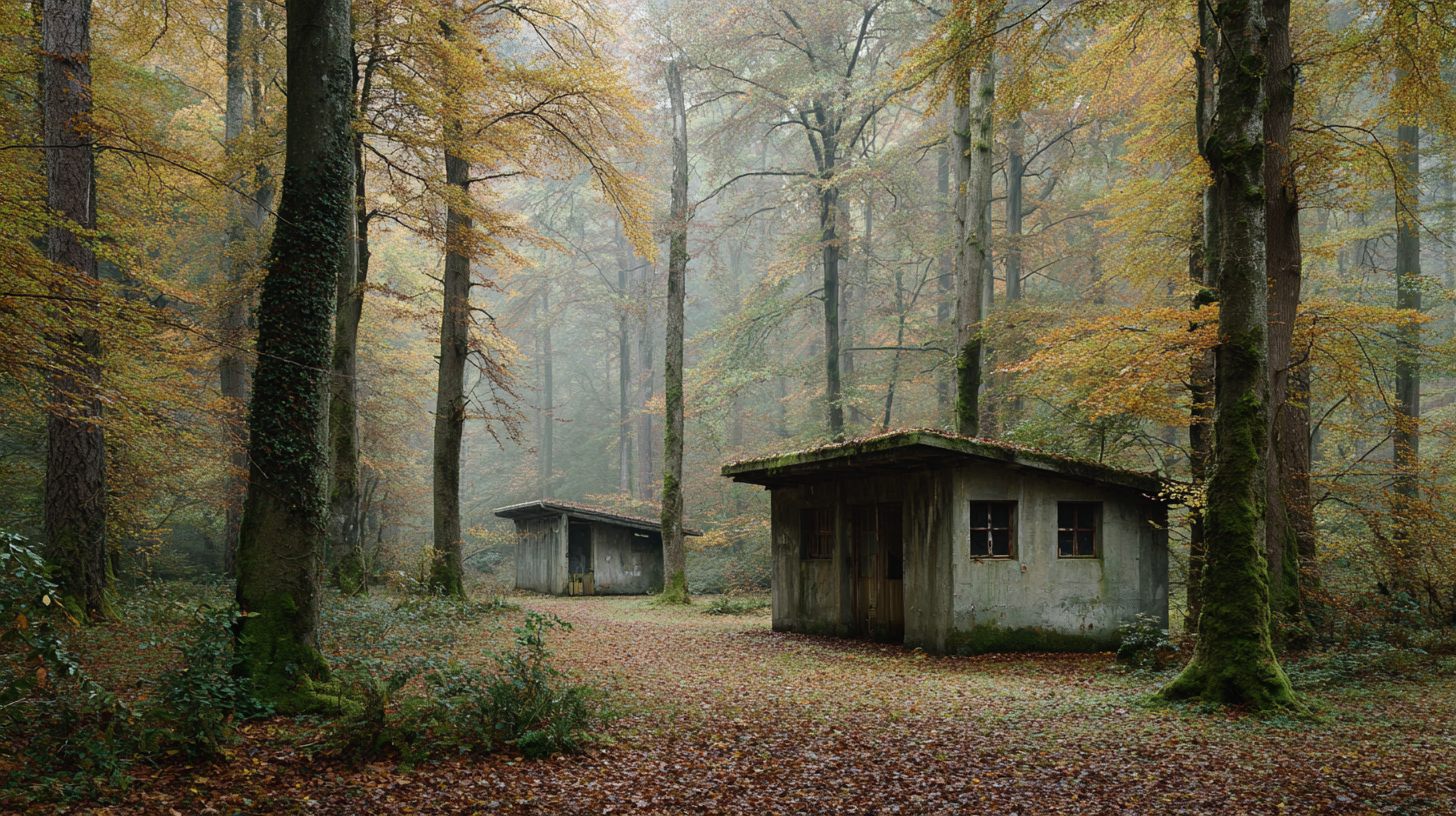
On June 6, 1940, Hitler and his high command established themselves in Brûly-de-Pesche, in a clearing in the Ardennes, to monitor the German offensive against France at close range. The site was given the codename Wolfsschlucht—”Wolf’s Ravine”—and the village’s 119 inhabitants were evacuated for the occasion. The church was converted into a cinema, where newsreels were screened and vetted, while its bell tower was repurposed to house a water tank.
An ordinarily peaceful village, suddenly emptied of its residents, became the setting for a decision that would weigh upon all of Europe.
One must picture the scene: the silence of the woods, the tension among the military staff, and the strange juxtaposition of Bavarian-style chalets—three of which were built—alongside a concrete bunker. This contrast, between the almost picturesque architecture and what it concealed, is perhaps what strikes the visitor most.
What can be seen today
The site has been renovated and is now operated under the name Brûly-de-Pesche 1940. Visitors can discover:
- the original bunker, a concrete shelter with two armored doors;
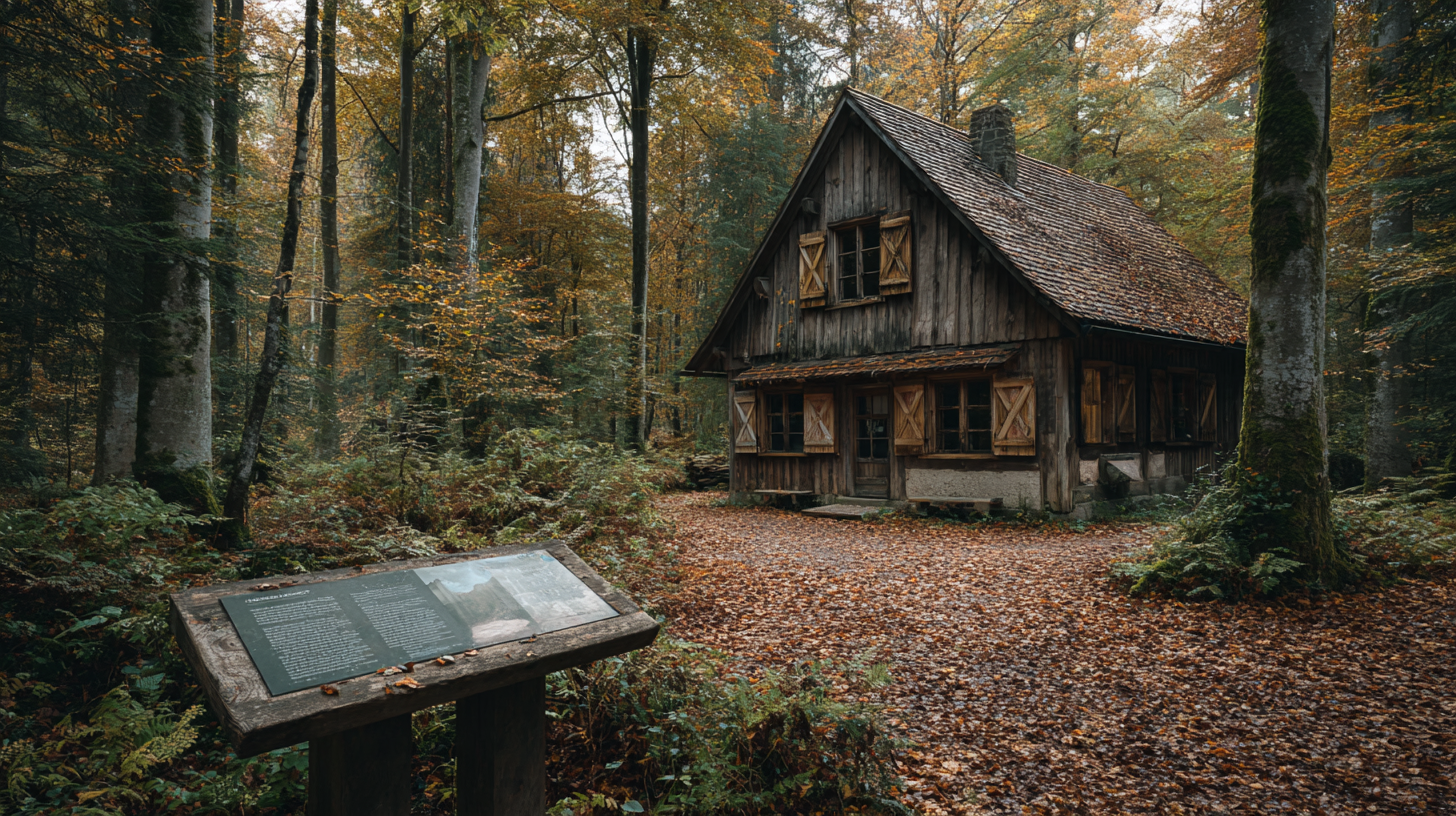
- two chalets—out of the three that once accommodated Hitler and his officers—which now house exhibitions on the German occupation and the local resistance;
- a swimming pool built for the Führer—a strange relic in the middle of the forest;
- a reconstructed resistance shelter, known as a “cagna,” which illustrates the daily lives of those who, within these very woods, defied the occupation;
- information panels throughout the village, which put a human face on the residents who were evacuated;
- a film, lasting approximately twenty minutes, focused on Hitler’s arrival.
The Resistance, from a human perspective
One of the two pavilions is dedicated to the “Groupe D” unit from Hotton—a branch of the Belgian Resistance. Photographs, artifacts, and scale models depict the village as it once was, while highlighting the harsh realities of life in the underground. It serves as a reminder that this forest was not merely a backdrop for those who held power at the time; it also provided a refuge for those who resisted them.
Why remember, today?
Visiting a site like this is not about indulging in an unhealthy fascination with those who once occupied it; rather, it is a way to gain the understanding needed to make sense of the past. The information panels scattered throughout the village, along with touchscreens and films, restore each group to its proper place: the local residents driven from their homes, the resistance fighters who rejected the “new order,” and today’s visitors—all of whom are called upon not to forget. As November 11th—the date commemorating the 1918 Armistice—approaches, this act of remembrance takes on a special resonance.
A history written into the landscape
What makes Brûly-de-Pesche so compelling is that history here is not confined within the four walls of a museum. It can be read in the forest clearing, in the shape of a roof, in the thickness of an armored door, or in the hollow of a swimming pool, now barely visible beneath a layer of fallen leaves. In autumn, as golden beech trees stand out against a gray sky, the contrast is striking: the tranquil beauty of the Ardennes serves as a reminder that this landscape was once the stage for upheavals whose memory we still carry today.
A visit, a state of mind
The site is explored with the help of an audioguide, allowing you to set your own pace. Families are welcome; however, given the gravity of the subject matter, it is advisable to prepare younger visitors beforehand. Children under eight are admitted free of charge, and those aged eight to twelve qualify for a reduced rate.
A few tips before you go
- Check the site’s calendar before your visit: opening days vary depending on the time of year. At the time of writing, the calendar highlights dates from October 17 to 31, November 1 to 8, and November 11.
- Dress warmly: part of the visit takes place outdoors, along the walking paths.
- Book online: tickets can be purchased via the official website.
At the end of your visit, you might also want to linger in the site’s gift shop before heading back on your way—carrying with you vivid images that will likely stay in your mind for a long time to come. For visitors arriving as a multi-generational group, the experience offers plenty of material for conversation: a grandparent might share stories passed down from their own elders, while a child might ask the very question that no one else dares to voice.
Around Brûly: The Ardennes of the Entre-Sambre-et-Meuse region
The Couvin area offers plenty of other reasons to linger. Those who enjoy traveling back in time can explore our account of the Three Valleys steam train, which runs between Mariembourg and Treignes. Nearby, you will also find the Musée du Malgré-Tout, where one hundred thousand years of human history are brought to life across a series of exhibition rooms.
Continuing with the theme of military and medieval history, the fortress of Poilvache offers a spectacular counterpoint. And if your journey invites you to enjoy the delights of a flavorsome autumn, food lovers might be tempted by Chimay escavèche. Finally, for a different kind of autumn landscape, head to the Bocq Railway.
The “Riezes et Sarts” region, in the rhythm of autumn
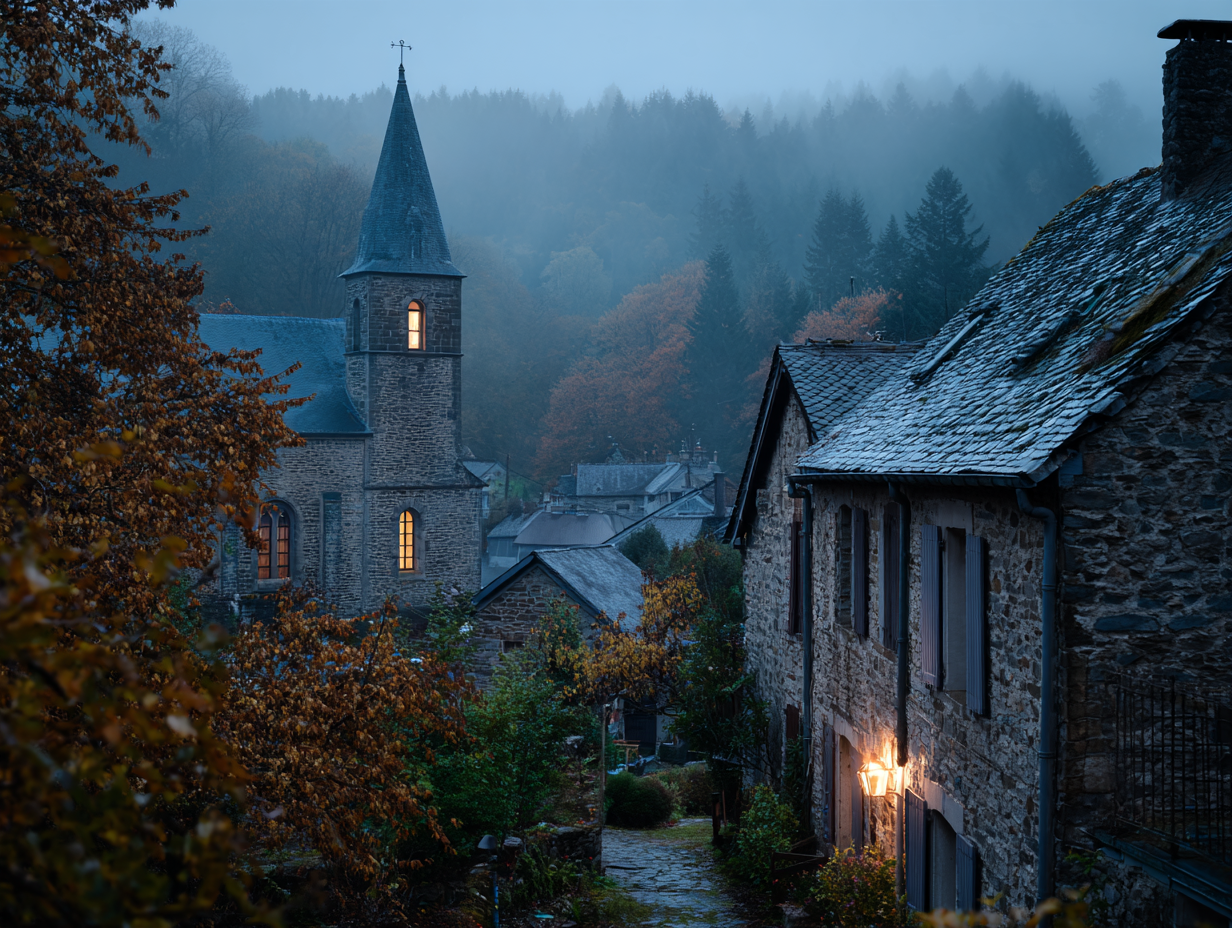
Brûly-de-Pesche is located in what the locals of Couvin call the “Pays des Riezes et des Sarts”—a region of forests, meadows, and stone-built villages where time seems to have stood still. The “Riezes” are former communal lands, while the “Sarts” are clearings that were once reclaimed from the forest. Autumn here is magnificent: the deciduous trees turn shades of gold and copper, and the paths wind deep into the shadows of the woodland.
It is also a region known for its hospitality; we recommend taking the opportunity to sample local produce—whether at a village inn or directly from a producer—before continuing your journey toward Le Bonsoy. After a somber visit, there is nothing like sharing a meal to reconnect with the warmth of the present moment.
A program for the day
- Morning — Depart from Hastière and travel across the Entre-Sambre-et-Meuse region (approx. 1 hour 10 minutes). Arrive at Brûly-de-Pesche, in the Place Saint-Méen, and begin your tour using the provided audio guide.
- Midday — Lunch break in Couvin or one of the neighboring villages—perhaps at a local inn, enjoying a seasonal slow-cooked dish.
- Afternoon — A walk through the surrounding forests, or a visit to another site in the “Pays des Riezes et des Sarts” region.
- Evening — Return to Le Bonsoy for a quiet meal, followed by a drink under the evening sky—an ideal setting for reflection.
Practical Information
| Location | Brûly-de-Pesche 1940 — Place Saint-Méen, 5660 Brûly-de-Pesche (Couvin) |
|---|---|
| Telephone | +32 60 37 80 38 |
| Website | bdp1940.be |
| Opening Hours | Refer to the online calendar (opening days vary) — please check before your visit |
| Admission (includes audio guide) | Adults €6.50; seniors and students €6; children aged 8–12 €4.50; under 8s: free |
| From Le Bonsoy | Approximately 1 hour and 10 minutes by car |
Information sourced from the official website; please verify opening days before your visit.
Grasping the passage of time, in the heart of the forest
After visiting such a historically charged site, nothing beats the tranquility of a green retreat. Our Serenity bungalow offers an immersive experience in nature—far from the hustle and bustle—allowing you to reflect on the day. To plan your visit, book your stay at Bungalows du Bonsoy.